
What to Do When a Parent Won't Talk About Their Past
By Anonymous
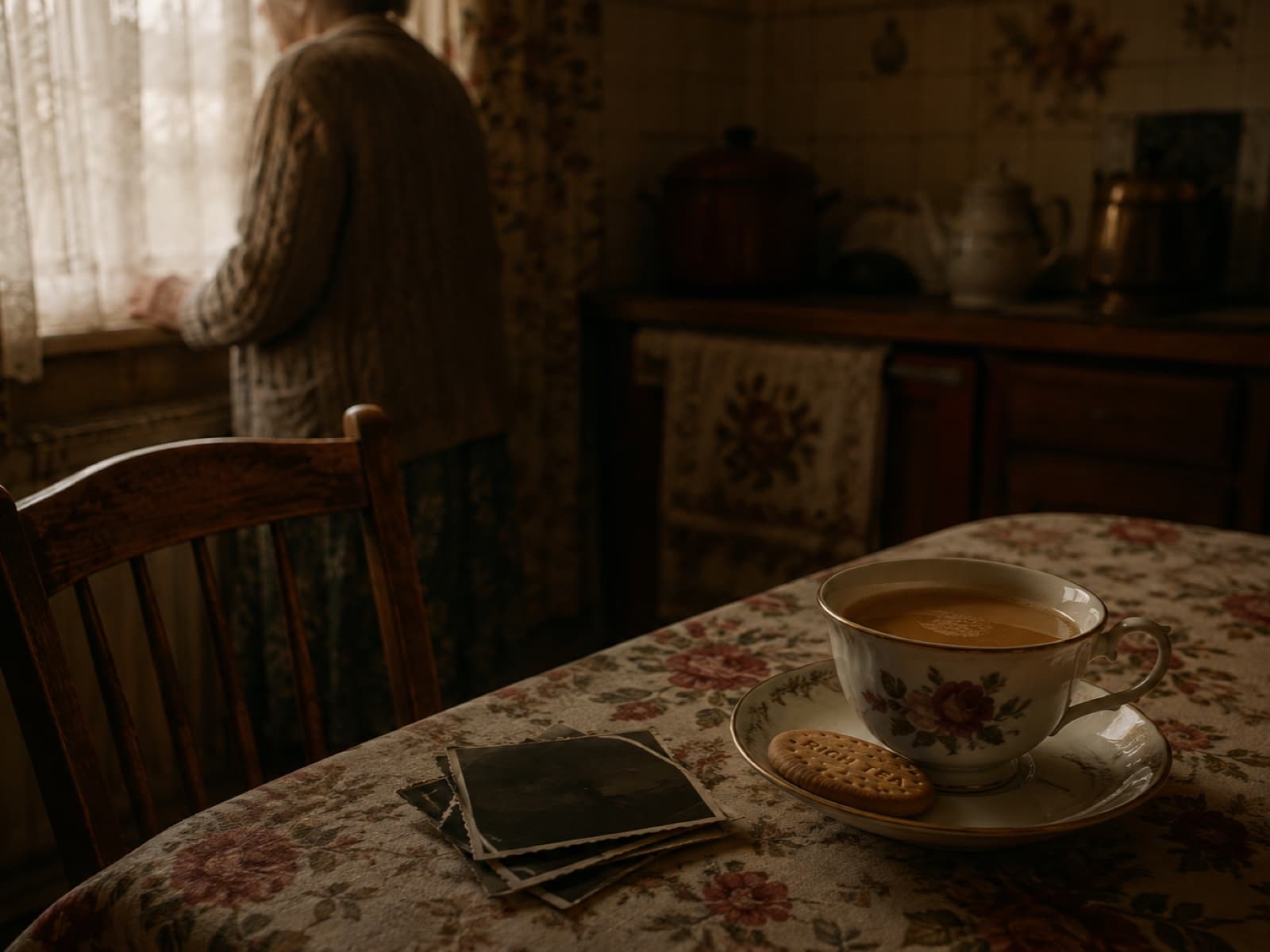
My mother-in-law never talks about her mother.
She talks about her father freely. A train driver who took her to the yard on his half-day shifts, made her ham sandwiches with too much English mustard, taught her to whistle. But her mother, who died when she was nine, is a locked room. If you ask her a direct question about the woman, she will change the subject with the practised elegance of someone who has been changing this particular subject for sixty years.
For a long time I thought this was unusual. It isn’t. Every family we’ve spoken to about our work has at least one person like this. The uncle who won’t discuss the army. The grandmother who won’t say a word about the war. The father who deflects any question about his childhood and steers the conversation, cheerfully and firmly, to what you’re doing next weekend.
If you’re trying to record a parent or grandparent’s life story, this pattern will show up somewhere. It might be a whole person or just a few years. Either way, it’s the biggest single reason people who want to preserve family stories never actually do.
This is a note on what to do about it.
Why parents don’t want to talk
There are, roughly, five reasons a parent might close down when you ask about their life. Knowing which one you’re dealing with changes everything.
Habit. They’ve spent forty years not being asked, and now that you’re asking they don’t know what to do with the invitation. This is the mildest and most common cause. It usually resolves with patience and low-stakes conversation.
Reticence about themselves. Some people simply don’t find themselves interesting. This is a generational trait in Britain in particular. It’s not depression, it’s not deflection. It’s a real belief that their life isn’t worth documenting because nothing “important” happened. They’ll happily tell you about a neighbour, a colleague, a family friend. Themselves, no.
Protecting others. A lot of the reason older people won’t talk about their past is that their past involves people who are still alive, or whose reputations they still feel responsible for. A brother who took his own life. A first husband who was cruel. A miscarriage nobody knew about. An affair. These aren’t secrets so much as things they’ve decided are not for public consumption.
Trauma. Real trauma, the kind that shaped a person’s whole nervous system, is different. War, loss, abuse, poverty of a certain grinding kind. If a subject makes them physically shut down, that’s a signal to move on and never come back to it without permission.
Culture. In many British working-class families, and in most immigrant families of any origin, there’s a strong “we don’t discuss that” culture around specific topics. Money is one. Feelings are another. Politics, sometimes. Sex, often. These aren’t personal blocks. They’re inherited.
If you’re going to get anywhere, you need to figure out which of these five you’re up against. The strategy is different for each.
Things that reliably don’t work
Before we get to what works, a few things that reliably don’t.
Don’t sit them down for a “life story interview”. Nothing shuts a British parent down faster than the phrase “so, I thought we could talk about your life”. They will get up and put the kettle on and change the subject. The interview frame is exactly what you must not use.
Don’t tell them it’s for the book, the archive, the family tree. Making it feel like a project raises the stakes. The stakes are already high enough for them without a stated purpose. Ask because you’re curious, not because you’re recording.
Don’t push through a change of subject. If they deflect, follow the deflection. Come back to the original topic once, later, gently. If they deflect again, that door is closed for now. Try a different door.
Don’t guilt them. “Dad, please, you’re not going to be around forever” is a real sentence people say and it is a catastrophe of a sentence. It causes exactly the opposite of what you want. It makes talking about a life feel like an obligation being extracted from a dying man. Nobody wants to be interviewed under those terms.
Don’t do it in front of your other family members. A parent will talk to one child about things they’d never say in front of the whole family. If there are stories you want, get them alone.
Strategies that actually work
Now the practical part.
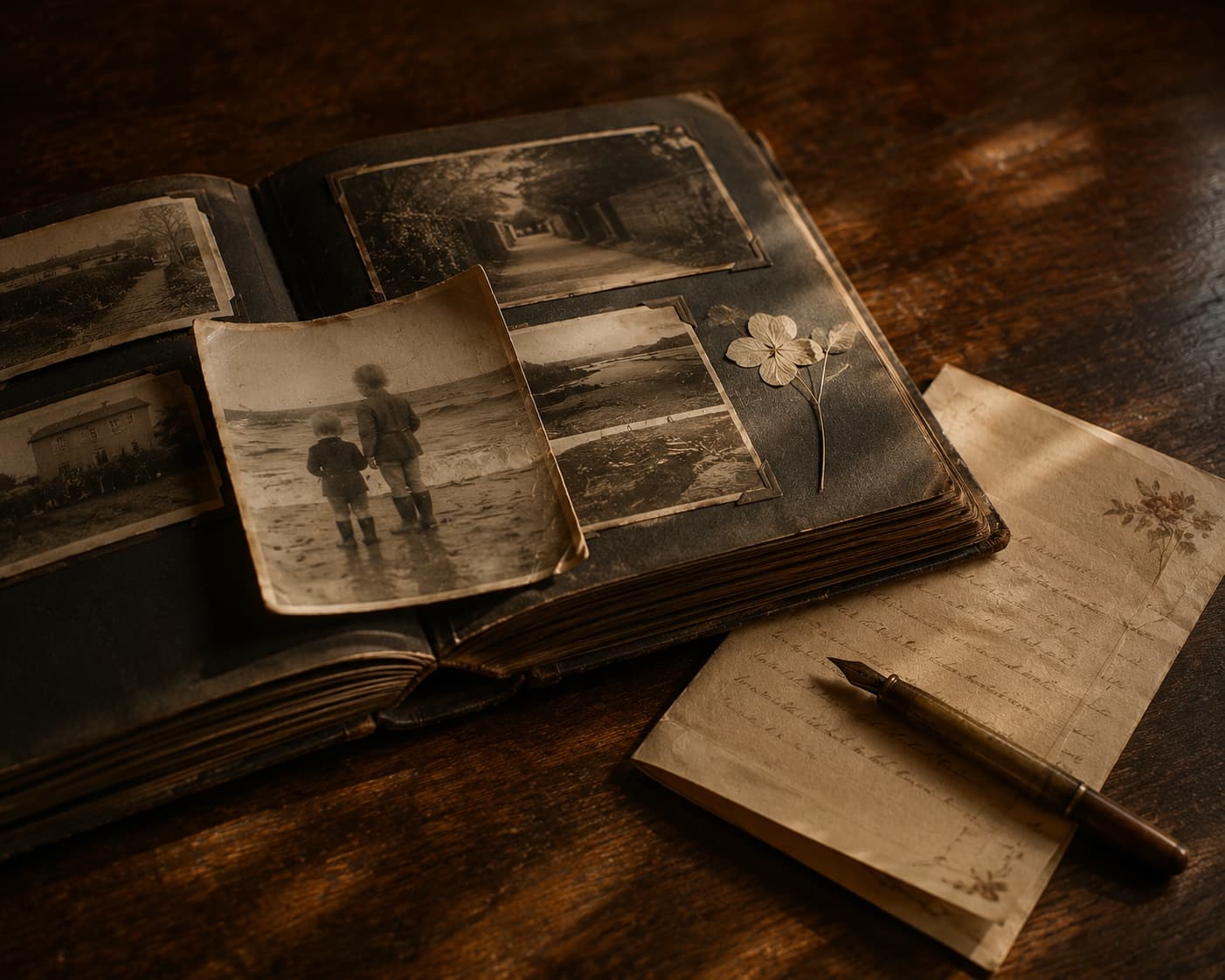
Start with objects, not questions. Photographs, old letters, a piece of clothing, a piece of jewellery, a recipe card written in someone else’s handwriting. Objects give a reluctant person something to look at instead of you, and a reason to talk that doesn’t require self-examination. “I found this old photograph in the loft, do you know who this is?” is a much easier question to answer than “tell me about your childhood”.
Ask about other people, not about them. “What was your mum like?” opens a door that “what were you like as a child?” doesn’t. A parent who won’t discuss themselves will often talk at length about their own parents, siblings, neighbours, teachers, cousins. The stories about them tend to leak out anyway, in the margins of the stories about others.
Ask about the world, not their feelings. “What was it like on the day the war ended?” beats “how did you feel about the war?”. The former is a question about facts. The latter is a question about interiority, which people in their seventies and eighties often find genuinely difficult to answer because it isn’t a habit they were ever asked to develop.
Let the silence sit. This is the hardest one. After you ask a question, if they don’t answer immediately, do not fill the silence. Wait. Twenty seconds of silence feels unbearably long, but it is very often the space in which the real answer arrives. If you rush to fill it, they will rush too, and you’ll get the polite version.
Meet in a neutral place, or on the phone. Kitchens are good. Long car journeys are excellent. Public places are usually bad. The bedroom of someone who is unwell is never a good interviewing environment. And the phone, surprisingly, is often better than sitting across a table, because they don’t have to hold your gaze, and eye contact makes reticent people even more reticent.
Take yourself out of it. If they’ve deflected every direct question about themselves, try asking questions about their generation, their town, their industry. “What did people at the shipyard do when the yards closed?” is easier to answer than “what did you do when the yard closed?”. They will tell you what people did, and you’ll gradually realise they’re telling you what they did.
The doors that won’t open
Some things you will simply never learn. That has to be alright.
If your mother won’t talk about the year she spent in a mother-and-baby home in 1962, respect it. If your father won’t say a word about his time in Northern Ireland, respect it. These silences are not obstinacy. They are decisions people have made about how to hold their own lives. To force them open would be a small violence, and it would poison every other conversation you’re going to have with this person for the rest of their life.
The stories that don’t get told get to stay untold. There is more than enough in what remains to fill a book.

Sometimes it’s easier with a stranger
One thing worth naming: reluctant parents will often talk more freely to a third party than they will to their own children.
There are a few reasons for this. The child is invested in a particular version of the parent, and the parent knows it, so any story that doesn’t fit that version feels dangerous to tell. A stranger has no version. A stranger will not be shocked. A stranger will not become sad. A stranger is not going to bring it up at Christmas.
This is a large part of why our service exists. When Write My Biography calls your parent, they’re not talking to their daughter or their son. They’re talking to a warm, curious interviewer with no history in the story. Things get said in that context that would not get said in the kitchen. That’s not a criticism of you. It’s just what happens.
If you’ve tried everything and the doors are still closed, it’s a genuinely useful option to consider.
A note on time
The strategies above work slowly. If you have a parent in their late seventies or eighties whose past you’d like to record, please don’t wait until you’ve read every book on family history and made a perfect list of questions. Start now. Ask one question at your next Sunday visit. Ask another the week after. Almost every family that regrets not doing this earlier says the same thing: we thought we had more time.
You probably do. But you have less than you think.